
The year 2024 was the hottest year on record, with the global average temperature exceeding 1.5 degrees Celsius above pre-industrial levels for the first time, according to the European climate agency Copernicus. Every month from January to June was the warmest ever recorded, and from July to December (except August), each month was the second warmest on record. Scientists are warning that the world is entering a new climate reality, with extreme heatwaves, floods, and storms becoming more frequent and severe. The report also highlights the failure of developed nations to meet their climate finance commitments to developing countries, despite the urgency of the situation.


Tumbbad got the best collections at the box office last weekend.
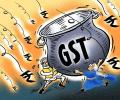
GST collections jumped 15 per cent to nearly Rs 1.68 lakh crore in November, the finance ministry said on Friday. Goods and Services Tax (GST) mop-up was over Rs 1.45 lakh crore in November 2022.

CBDT feels 30% growth in income-tax not feasible.

Mortgage finance remains a structural growth opportunity in India with a policy focus on affordable housing, housing shortages, low mortgage penetration, and rising incomes as drivers. Affordable Housing Finance Companies (AHFCs) serve the mass market, low-income segments, which is the least-serviced category, and to operate in this segment, the mortgage provider needs good assessment skills. AHFCs and HFCs have also been increasing exposure in other mortgage segments (loan against property, developer loans among others).

Finance Minister Nirmala Sitharaman on Thursday proposed to borrow Rs 14.13 lakh crore by issuing dated securities to meet revenue shortfall in the next financial year starting on April 1.

The Pakistan Cricket Board has allocated 12.8 billion rupees for the renovation of stadiums in Lahore, Karachi and Rawalpindi ahead of next year's ICC Champions Trophy, informed PCB chairman Mohsin Naqvi.

'The road ahead for the government's fiscal management will be full of many new challenges,' warns A K Bhattacharya.

'Retail investors, who had not seen such a massive correction in the SMID universe since COVID-19, are witnessing something like this for the first time. Panic profit booking may continue.'

It is important to increase employment in general. It is even better to increase good quality jobs. Strategically, it is important to move people from farms to factories to improve overall labour productivity. It is important to improve job opportunities for women, for urbanites and for the educated. The Budget does not contain ideas to do any of this, points out Mahesh Vyas.

In 2009, FinMin proposed to move regulators' reserves into public account. These accounts were finally opened in 2013-14. However, no funds have been deposited in it so far.

The finance minister may stagger some of the recommendations.

Instead of conceding the demand for a cut in personal income-tax rates, Finance Minister Nirmala Sitharaman should phase out many exemptions in both personal and corporation taxes, suggests A K Bhattacharya.

The challenges before the coming Budget are more daunting than those in 2021, reveals A K Bhattacharya.

Tuesday's bridge collapse once again puts the spotlight on the city's urban infrastructure and a dire need for its development.

Sources in the Rural Development Ministry said the actual expenditure incurred in 2020-21 will be higher than the allocated funds and it will at least be at par with this year's total estimated expenditure of MGNREGS.

Finance Minister Nirmala Sitharaman is likely to strike a fine balance between being fiscally prudent and growth supportive when she presents her fourth straight budget on Tuesday, which is expected to have plans to boost spending to revive investment and create jobs. The Budget for the fiscal year starting April 1, 2022 is likely to raise spending on infrastructure to set the economy on a firmer footing. The stage for the Budget presentation was set by the Economic Survey stating that the government has the fiscal space to do more to support the economy that is forecast to grow at a healthy 8-8.5 per cent growth in the 2022-23 fiscal.

The numbers become all the more important because actual tax collections fell short by Rs 1.91 trillion compared to what was projected in 2018-19. Besides, the Budget for FY20 did not give actual figures for 2018-19, but the revised numbers given in the interim Budget.

Can the finance minister manage our expectations, asks A K Bhattacharya.

CII has also called for tax incentives for new health care projects and import duty relief for lifesaving equipment.

The forthcoming budget needs to delay fiscal consolidation, instead should focus more on supporting the pandemic battered-economy and boost consumption demand by offering income tax soaps and cutting fuel taxes, says a report. In a pre-budget report, India Ratings said it expects the new budget to consolidate and strengthen the plan set out in the last budget, rather than trying out new things by continue with the revenue and capital expenditure pattern of FY'22 to provide stability and consolidation to the past/ongoing efforts, and to focus on boosting demand by generating employment opportunities in areas/sectors that have been impacted more by the pandemic. The report therefore expects the finance minister to delay fiscal consolidation and make it to be a gradual and calibrated process, thus ensuring the necessary fiscal support that the economy needs is available till the recovery acquires its own momentum.

The Union Budget on Wednesday outlined several initiatives to drive India's technology agenda and boost digital infrastructure, including new centres of excellence for artificial intelligence, National Data Governance Policy, and Entity DigiLocker.
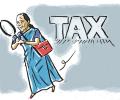
Direct tax collection, including personal income tax, rose by 35.46 per cent to Rs 6.48 lakh crore in the current fiscal up to September 8, reflecting an uptick in the economy. The country recorded a GDP growth of 13.5 per cent during the first quarter ended on June 30, 2022. Direct tax collection, net of refunds, stands at Rs 5.29 lakh crore which is 30.17 per cent higher than the net collections for the corresponding period of last year, according to the data released by the Income Tax Department.

The government has limited room to reduce expenditure without further weakening growth, it noted.

Nirmala Sitharaman on Wednesday assumed charge as the Finance and Corporate Affairs Minister for the second consecutive term and is slated to soon present the final Budget for FY '25 that is going to set the tone for the Modi 3.0 government's priorities and direction for Viksit Bharat. Upon her reaching the North Block office, Sitharaman was greeted by Finance Secretary T V Somanathan and other top officials. Minister of State for Finance Pankaj Chaudhary was also present. Chaudhary assumed charge on Tuesday evening.

Days after cutting the salaries and other allowances of MPs and ministers, the government has passed instructions to all departments to reduce their expenditure by as much as 60 per cent from their first-quarter spending plans.

The interim Budget proposals that will be presented on February 1 in the backdrop of the general elections scheduled in April/May 2024 are likely to have a hint of populism, believe analysts, but are unlikely to derail the government from its path of fiscal prudence.

Ahead of Union Budget, the government on Thursday said it hopes to exceed the indirect tax collection estimate of Rs 3.36 lakh crore for this fiscal in view of the buoyancy in the economy.

The Budget outlay for health and well being is Rs 2.23 lakh crore in 2021-22 as against BE of Rs 94,452 crore and marks an increase of 137 per cent," she said while presenting 2021-22 Budget in the Lok Sabha.
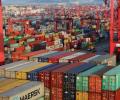
Exporters on Thursday demanded fiscal incentives, tweaking in customs duties on certain products and credit at affordable rates in the forthcoming Budget to boost exports and create jobs. In a pre-budget virtual meeting with Finance Minister Nirmala Sitharaman, the Federation of Indian Export Organisations (FIEO) said the depreciation of the rupee against the US dollar is affecting exports' competitiveness and the sector requires more support. "Creation of employment is the biggest challenge faced by the country...We would urge the government to provide fiscal support to units which provide additional employment in the export sector," the exporter's body said.

A query has been raised about the "missing" Rs 1.7 trillion fiscal hole in India's financial accounts. This is so because the Budget uses the revised estimates, a projection of how much the government was expected to earn, while the Economic Survey uses the first actual numbers.

The finance ministry has cautioned that global and regional uncertainties and domestic disruptions may keep inflationary pressures elevated in the coming months, warranting "greater vigilance" by the government and the Reserve Bank of India (RBI). "Russia's decision to terminate the Black Sea grain deal, along with dry conditions in major wheat-growing areas, caused a price spike in cereals. Domestic factors like white fly disease and an uneven distribution of monsoon exerted pressure on vegetable prices in India," the ministry said in its latest Monthly Economic Report for July, released on Tuesday. However, the report maintained, the recent price surge in certain food items "is expected to be transitory". "Tomato prices are likely to decline with the arrival of fresh stocks by the end of August or early September.

In previews of Q2FY25 and beyond, industry analysts are expecting a turnaround for IT services. High teens earnings per share or EPS growth is expected for the next two-three financial years. The hopes are backed by deal wins of above $100 billion as at Q1FY25, up 16.6 per cent year-on-year ( Y-o-Y).

The government's subsidies on food, fertilisers and petroleum are estimated to decline by 39 per cent to Rs 4,33,108 crore this fiscal and fall further by 27 per cent to nearly Rs 3.18 lakh crore in 2022-23. In its revised Budget (RE) estimate for the 2021-22 fiscal, the government has pegged total subsidies to be at Rs 4,33,108 crore against the actual Budget estimate of Rs 7,07,707 crore in the previous financial year. Out of which, the food subsidy is estimated to decline to Rs 2,86,469 crore in the current fiscal from Rs 5,41,330 crore in 2020-21, while petroleum subsidy is estimated to fall to Rs 6,517 crore from Rs 38,455 crore in the said period.

The government expects indirect tax collection to be lower than the Budget Estimate (BE) of Rs 13.38 trillion this fiscal year, despite prospects of netting goods and services tax (GST) in large amounts, Revenue Secretary Tarun Bajaj has said. "Indirect tax collection may see lower realisation than budgeted on account of cuts in excise and customs duties. "We could see a shortfall of about Rs 1.5 trillion on account of those," he told Business Standard.

The government has utilised 'escape clause' under the FRBM Act which provides it leeway for relaxation of fiscal deficit roadmap during time of stress.

Terming infrastructure as the "backbone" of any nation's development, Goyal while presenting the interim Budget for 2019-20 in the Lok Sabha said India aspires to be a USD 10 trillion economy in the next eight years, and on the anvil is next generation infrastructure of roads, railways, seaports, airports, urban transport, gas and electric transmission and inland waterways.

Can Jaitley's team hope to garner 17% more on personal income tax?
Banking on increased freight haul and earnings from upper class travellers, Indian Railways has projected a gross earning of Rs 43,445 crore (Rs 434.45 billion) in 2003-04.
